
Criminal Court Cases in Hamilton County
Hamilton County divides criminal court work by charge level. Circuit Court hears felonies and juvenile delinquency matters. County Court hears misdemeanors and criminal traffic. The Clerk of Circuit Court and Comptroller maintains both sets of files at 207 NE First Street, Room 106, Jasper. Judge Jamie L. Tyndal handles county criminal cases, first appearances, and traffic, and may receive assigned felony work. Hamilton is part of Florida's Third Judicial Circuit.
The clerk file begins when formal papers reach the court. It may show a charge that differs from the arresting officer's initial allegation because the prosecutor makes a separate filing choice. Clerk staff can provide docket information, copies, and certified dispositions. They cannot change a hearing date or give legal advice. A searcher should first identify whether the matter is felony, misdemeanor, or criminal traffic, then confirm the court and case number before requesting a document.
Hamilton County CiviTek Gateway
The Hamilton Clerk Court Search page supplies the official route to CiviTek Online Court Records Search. During research, the gateway displayed a county selector and Go button, but the downstream Hamilton form did not render. That limitation matters. It would be unsafe to promise searches by birth date, wildcard, filing range, document download, or any other field that could not be verified.
The source page also warns that online data is not the official court record. Use the portal to locate a likely docket, then compare the court division, filing date, charge, and disposition. If the form stops at county selection, call the clerk at 386-792-1288 or visit Room 106. An absent online hit does not establish that no case exists.
The manifest image comes from the CiviTek Hamilton gateway.
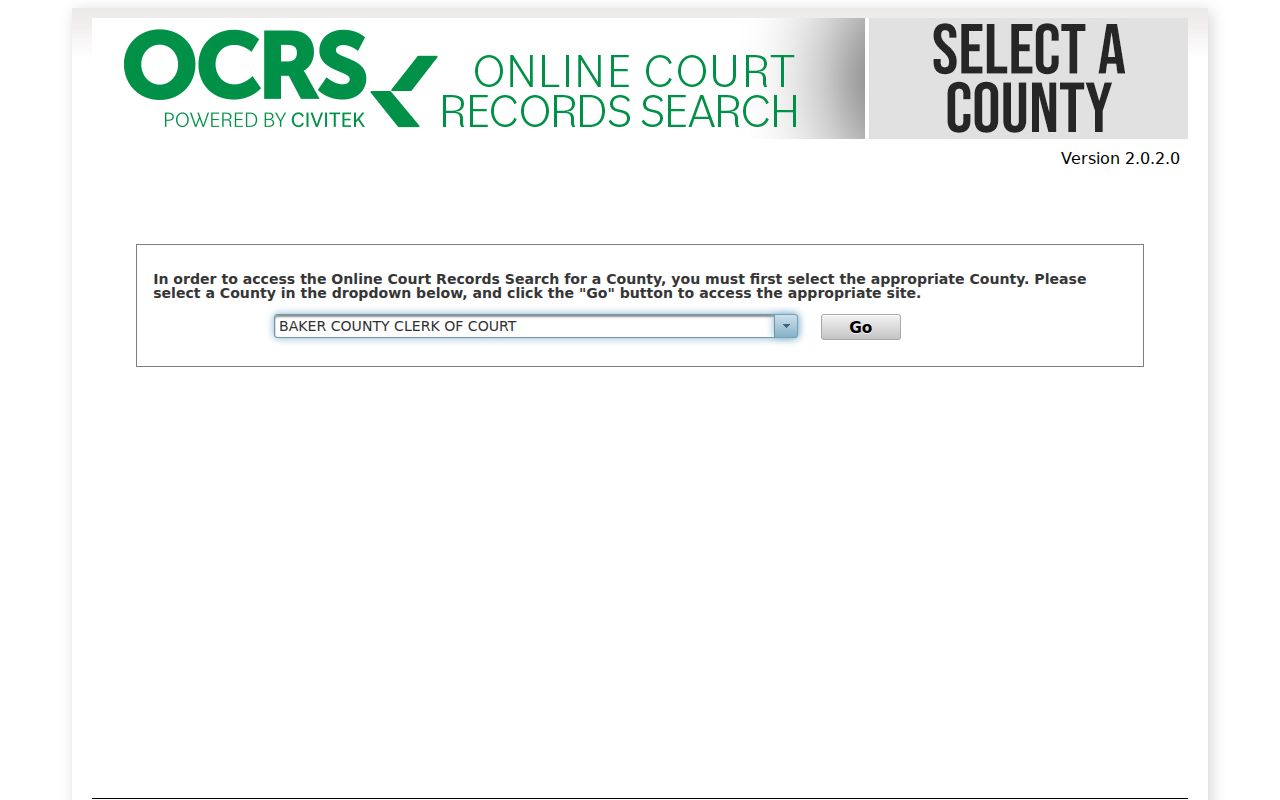
Its limited visible fields support a careful fallback to the clerk instead of invented search options.
Hamilton County Case Record Searches
Use the clerk's gateway for a free first pass. Older, certified, or non-rendering Hamilton County case records require direct clerk help. Keep the court division in view because felony and county-criminal files follow different paths.
- Open the Clerk Court Search page and read its access notice.
- Follow the CiviTek link, select Hamilton County, and use the form if it renders.
- Separate Circuit felony matters from County misdemeanor or criminal-traffic matters.
- Open the docket and verify filing, charge, hearings, disposition, and sentence entries.
- Call or visit the clerk for an older file, missing screen, plain copy, or certified disposition.
| Field Label | Type | Required | Notes |
|---|---|---|---|
| County | Dropdown | Yes | Select Hamilton from the verified county chooser. |
| Go | Button | Yes | Opens the selected county route. |
| Downstream fields | Not verified | Unknown | The Hamilton form did not render during inspection. |
What a Criminal Case File Contains
A Hamilton County case file describes the court process, not merely custody. It can connect formal charges to motions, hearings, pleas, judgment, sentence, and financial obligations. Remote access may omit a protected document even when the public docket identifies an event. Ask the clerk which copy proves the point at issue.
| Case Number & Court | Identifies the file and whether Circuit or County Court holds it. |
|---|---|
| Charging Document | States the offense formally filed by the prosecutor. |
| Docket Entries | Chronological notices, motions, orders, and court activity. |
| Hearing Dates | Arraignment, status, pretrial, plea, trial, or violation hearings. |
| Disposition & Judgment | Shows dismissal, plea, verdict, adjudication, or other outcome. |
| Sentence & Conditions | Records custody, supervision, costs, and other ordered terms when public. |
Criminal Case Stages in Hamilton County
A person unable to bond is ordinarily brought before the county judge within 24 hours, with weekend first appearances at the jail. First appearance addresses bond and counsel. In a misdemeanor matter it may also allow a plea. A felony generally proceeds to later Circuit Court arraignment, where formal charges are stated and a plea is entered.
A not-guilty plea can lead to status conference, pretrial work, a later change of plea, or trial. A denied violation of probation goes to a violation hearing. Failure to appear may lead to a warrant, bond forfeiture, and detention. Released defendants must update the Misdemeanor Department in writing because notices may go to the arrest address.
Case flow: Charges Filed › Arraignment › Pretrial › Plea or Trial › Disposition › Sentencing
Hamilton Felony and Misdemeanor Paths
The clerk's felony page explains arraignment, pleas, failure to appear, and payment channels. Published felony-cost payment methods include cash, cashier's check, money order, major listed cards, and debit or check cards. The page says no phone credit-card payment and no personal checks for fines or costs. Copy and certification prices should be confirmed because the research did not verify a criminal-copy line item.
The manifest image records that official felony workflow.
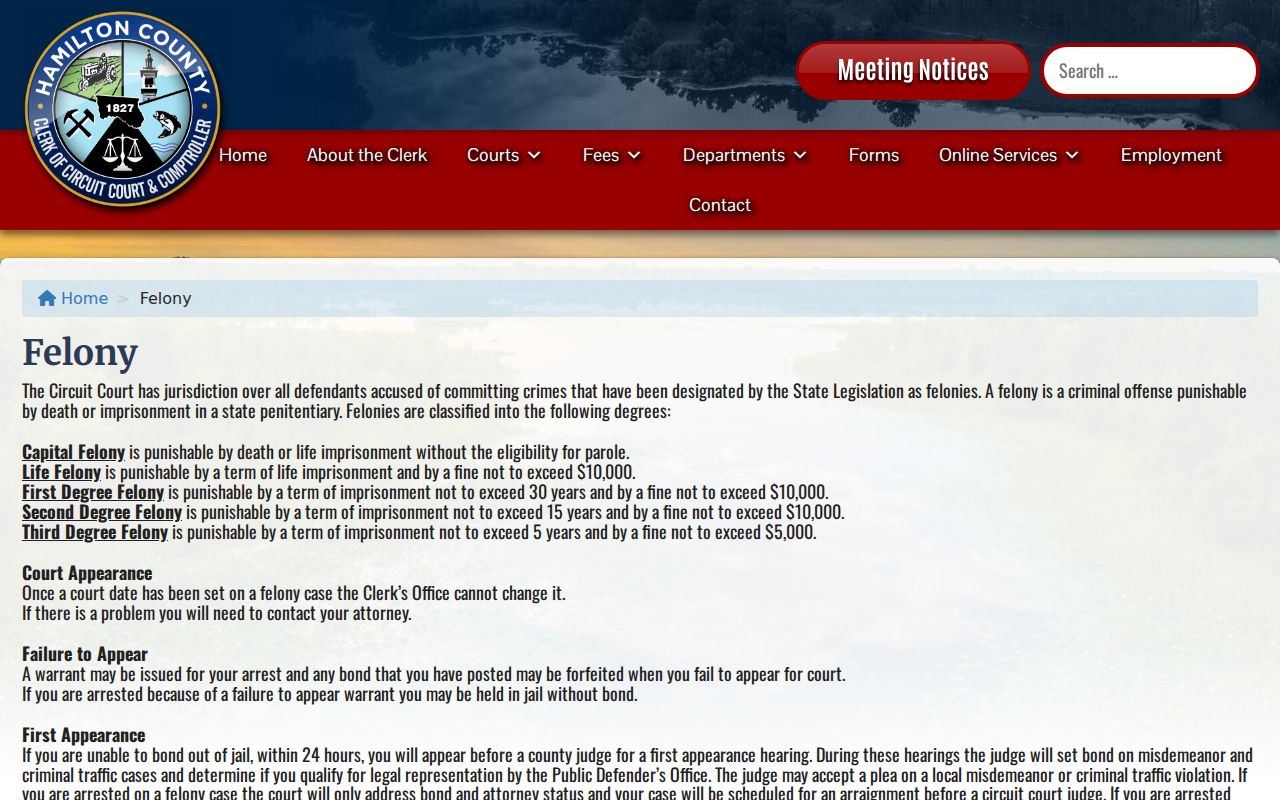
County misdemeanor guidance adds address-change and courtroom rules, so the correct division affects both search and next steps.
Hamilton Appeals Use ACIS
Florida has no single statewide trial-court docket covering every county. Hamilton trial cases remain with the clerk and CiviTek. The Appellate Case Information System, or ACIS, covers appellate dockets and available appellate documents. It should not be used as a substitute for the Hamilton trial file. A case that moved on appeal may require both systems to understand the trial outcome and later review.
The manifest image shows the official ACIS entry point.
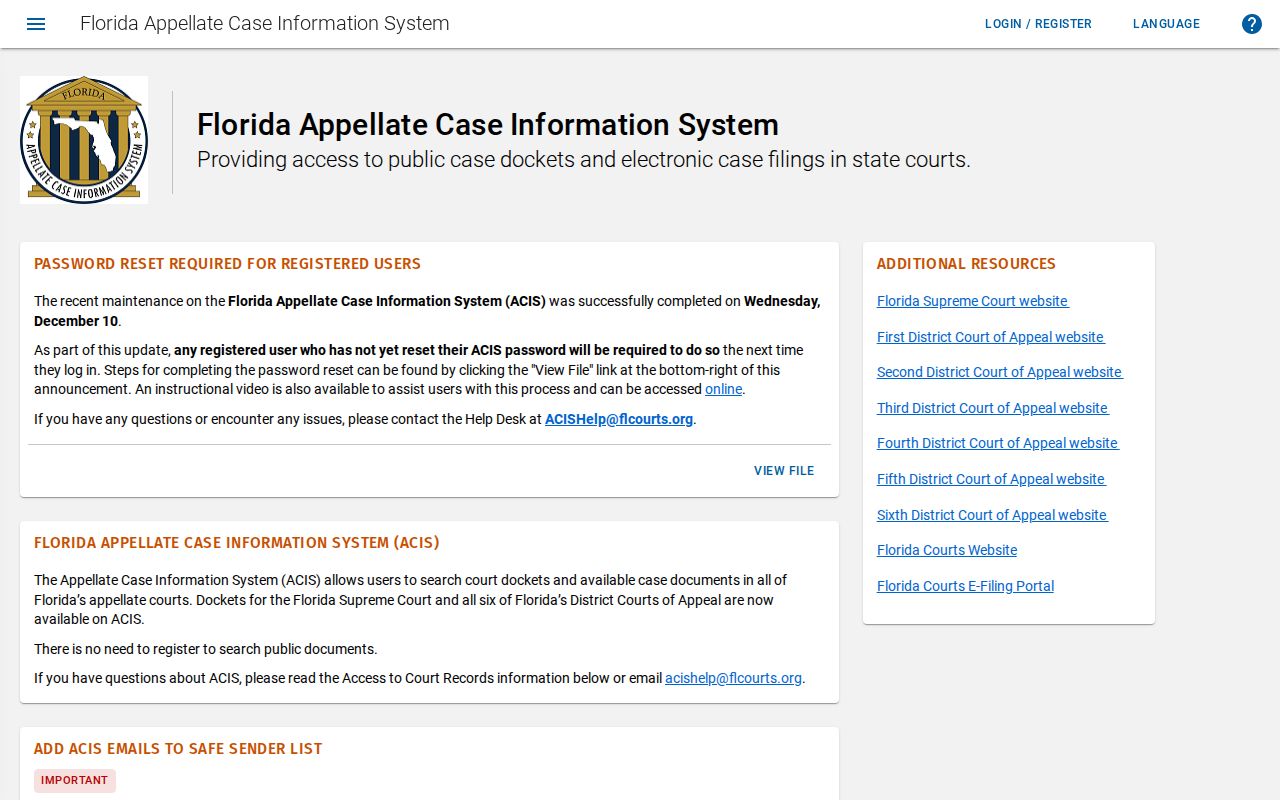
This two-level search prevents an appellate result from being mistaken for the complete local docket.
Hamilton Clerk Counter Fallback
The Clerk's court-search gateway is a starting point, not a promise that every historical document is online. Room 106 remains the practical route for archived, unindexed, or non-rendering files and for certified dispositions. Give staff the person's name, an approximate filing year, the court division, and a case number when known. Common-name results should be checked against the charge, filing date, and case number rather than accepted as identity proof.
The official search page captured in the manifest shows that local handoff.
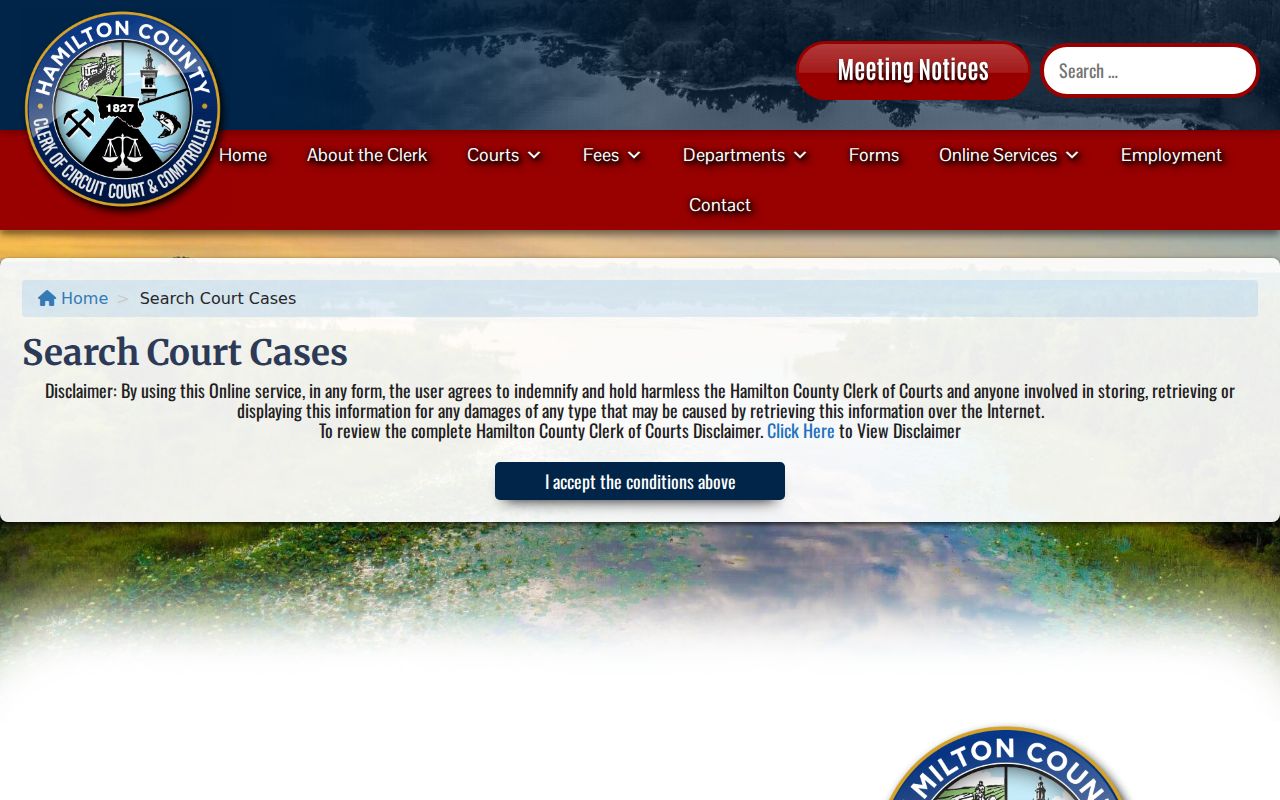
Calling 386-792-1288 before traveling also lets a requester confirm copy charges, certification needs, and whether counter inspection is available.
Hamilton Courtroom Records and Counsel
The Hamilton misdemeanor page explains first appearance, pleas, address updates, courtroom conduct, and the consequences of missing court. It is useful context for reading a docket because an entry may record a status conference, change of plea, failure to appear, or warrant rather than a final judgment.
The manifest preserves the clerk's county-criminal guidance.
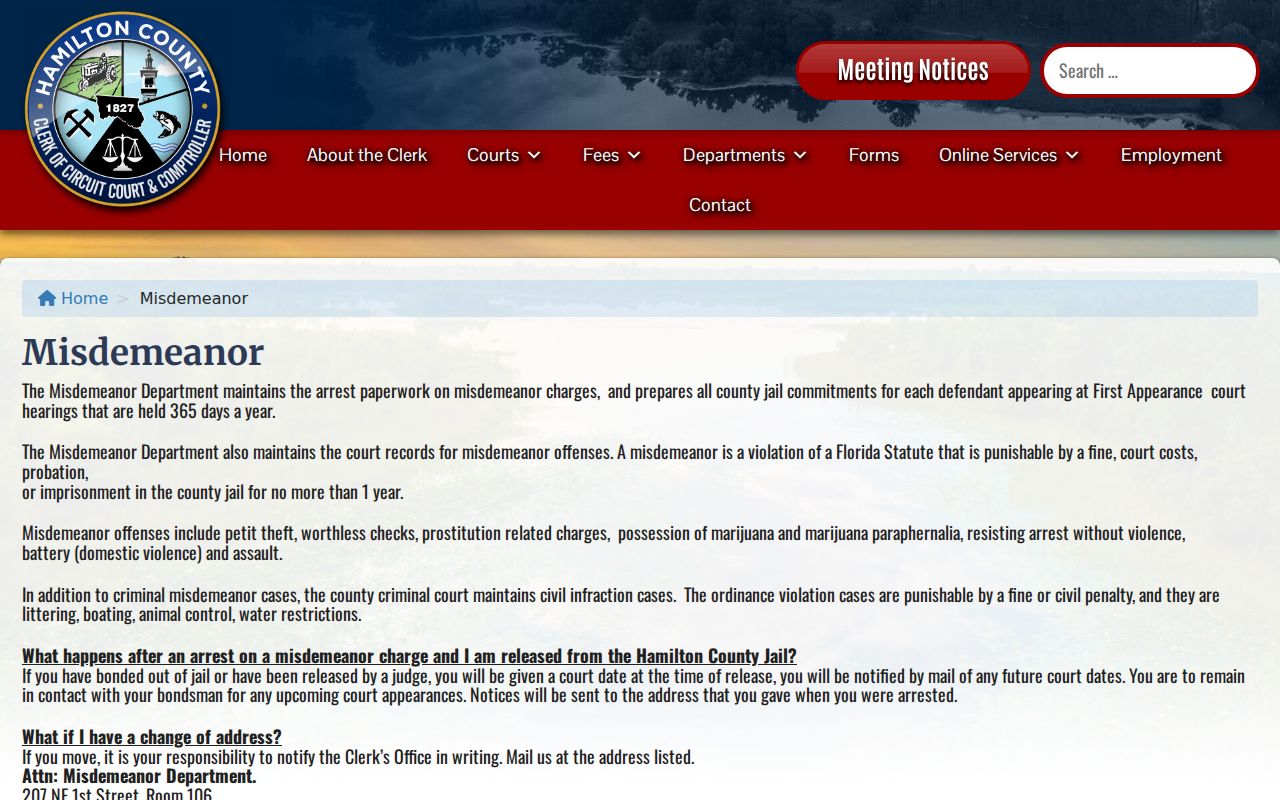
That procedural page explains why a docket can remain active through several settings before a disposition appears.
Defendants who qualify for appointed counsel are served by the Third Circuit Public Defender. The office is not a public case-search service, but its role helps distinguish counsel information in the file from clerk-held public records.
The Public Defender's official site is also assigned to this page.
Questions about copies still go to the Clerk; legal strategy belongs with counsel.
Access Rules for Case Records
Florida Constitution article I, section 24 and chapter 119 support public inspection, subject to exemptions. Section 119.07 governs custodian duties, copies, redaction, and exemption handling. Court access also follows judicial rules and section 28.2221. A record may be open at the counter while some data or documents remain unavailable remotely.
Juvenile material, sealed or expunged matters, active investigative information, confidential victim data, and protected identifiers can be withheld or redacted. Ask the clerk for the statutory or rule basis when material is unavailable. Inspection may avoid copy expense, while an extensive request can carry actual duplication cost and a reasonable special-service charge. Certified records come from the clerk, not a portal screenshot.